


|
COMMENTUM speaker typically shows bias
WindsorOntarioNews.com May 8 2026 A controversy at the University of Michigan is so indicative of how one-sided the debate about Palestine and Israel is these days. The faculty senate chair addressed convocation at Michigan Stadium this week and made a point of praising students who engaged in a pro-Palestinian "encampment" in the wake of the Israel-Hamas war. The same took place at U Windsor and countless other universities around the world. The chair, Derek Peterson, put his remarks in the context of the university's "proud tradition of civil disobedience" and the "injustice and inhumanity of Israel’s war in Gaza.” University president Domenico Grasso sharply criticized him, calling the remarks "hurtful and insensitive to many members of our community.” Peterson pleads his words were moderate. In fact, "I didn’t use the word genocide because it was thought by administrators to be unpolitic to use that word, even though I probably should have used the word because it’s an accurate description of what happened.” In fact, it's completely inaccurate. Israel has never sought to wipe out the Palestinian people but Hamas has it in their Charter to do just that to Jews in Israel. Regardless, Peterson is typically one-sided in calling out just Israel, when Hamas murdered 1200 and kidnapped 250 Israelis on Oct. 7. But not a word about that, oh esteemed faculty member, you who are so concerned about "injustice?" Floor-crossings have got to stop
WindsorOntarioNews.com April 24 2026 Mark Carney has got his majority government by hook or by crook, which some might take as a pun. Except, that is, everything is legal. And that’s a problem. To recap, the Carney Liberals finally reached their goal as result of five MPs from opposing parties “crossing the floor” to join the government. The Libs also won three byelections to put them over the top. But they wouldn’t have scored majority status if not for the crossings. Sure, this behaviour has gone on from time immemorial – by all parties – but it seems particularly egregious and a blatant grab for power this time. Ie., Carney has no ethics. The latest to do so was from our own backyard - Sarnia’s Marilyn Gladu (photo) who should be nominated as hypocrite of the year since just months earlier she was railing against this very thing and was one of the Conservative Party’s biggest stalwarts. But typically none of these hypocrites have answered to their constituents who voted at least in part because of the party the MP represented, another which may have been individual character (another pun?). Who knows what the “pay off” was although some, like Gladu, have suggested they just like the direction the Carney government is going in. But it’s got to stop. Legislation should be brought in that would prevent this from taking place again. There are a couple of ways to do this. Voters should get a vote on recalling their MP. And/or a byelection should immediately be held to determine if voters still want to support that individual. Outrage over this absolute discharge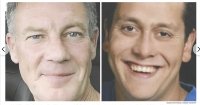
WindsorOntarioNews.com April 8 2026 For pure outrage look no further than a decision by the Ontario Review Board who gave a Syrian refugee an absolute discharge after an outrageous driving incident that killed two men and severely injured a third. The refugee, Mouhamad Al Jalmoud, 20 at the time, may not even have known how to drive. The incident occurred in Hamilton when Al Jalmoud was stopped by police after seeing him driving erratically. He “did not at this time have a valid driver’s licence nor had he ever driven a vehicle in Canada since his arrival in 2018,” the board said. When approached by police he took off, failing to stop at another red light and collided with the other vehicle with three men inside (John William Wignall, 57, left, and Ryan Valentim, 38, were killed, and Hardick Patel severely injured). Then Al Jalmoud “took off on foot leaving the scene" returning later. The board oversees individuals found unfit to stand trial or not criminally responsible due to their mental state. An earlier criminal trial heard that as a child he “witnessed the horrors of the Syrian civil war, including bombings, airstrikes, killings in the street, mass and arbitrary arrests, and torture" and developed a fear of police and authority. He originally served six months of a more than three year sentence and was released upon filing the appeal. Two psychiatrists testified he suffered PTSD leading to a disassociative state at time of the incident. Another disagreed, saying Al Jalmoud "panicked when he saw the police, knowing he was driving without a licence and possibly without knowing how to drive." Photos: Hamilton Police Ed minister takes stab at woke boards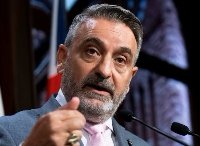
WindsorOntarioNews.com March 25 2026 Hurray for Ontario education minister Paul Calandra (photo) in taking it to woke school boards across the province that insist in injecting political ideology - usually of the left wing variety - into graduation exercises. Calandra has sent a memo to boards warning them the events - seminal moments in students' and parents' lives - should be apolitical and “are not an appropriate forum for organizers or administrators to express political views or promote personal or institutional positions.” The minister said if not he would take action - undefined - against the boards. He even used a term they might understand, that exercises should be "inclusive" and respectful. His notice may have been triggered by a memo by the Hamilton-Wentworth board that was over the top in suggesting the kind of rhetoric or atmosphere at a ceremony - i.e., an “antioppressive/antiracist/anticolonial lens”, land acknowledgments “as citizens of Turtle Island,” and asking schools to “consider how commencement events can show our role as treaty partners.” Oh yes, it indicated “not all learners/ guests in attendance may choose to stand” for the national anthem. The usual suspects have criticized Calandra. NDP MPP Chandra Pasma called it a "political stunt." Surely she could come up with something better than that. Even Liberal leader John Fraser said “there are grave challenges in education, but who says what at graduation ceremonies is not one of them.” The unions' opposition is to be expected. The Elementary Teachers' Federation of Ontario called it "overreach" and "willingness to undermine our professional judgment.” Secondary teachers even called it "demoralizing" suggesting it undermines what grad ceremonies are supposed to be about. We applaud Calandra and hope this is the first step on a crackdown on the increasingly rogue nature of school boards, including our own public one, which increasingly have become bodies of left wing ideologues and intolerant of opposing opinions. Dilkens's tolling proposal makes little sense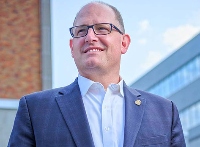
WindsorOntarioNews.com March 7 2026 It's hard to know what Mayor Drew Dilkens envisions by suggesting a temporary toll on trucks using Huron Church Road. Obviously it's a response to US President Donald Trump's rhetoric about stalling the opening of the almost completed Gordie Howe Intl Bridge until his country is "fully compensated" for the cost. Which of course is ridiculous since Canada paid for it. Trump's remarks came in early February and a month later there is no change in his stance. Yet Canadian politicians affirm the bridge will open as usual. When, who knows? But we've never known the exact date. We can understand Dilkens's frustration with Trump. And, yes, the city pays for upkeep of Huron Church, a six lane thoroughfare more akin to a provincial highway - with 10,000 cross border trucks using it daily. Mind you, trucks now use a much smaller portion since the Herb Gray Parkway opened. There is certainly argument for more provincial and federal compensation. But charging truckers a toll? First, truckers aren't to blame for the US's impasse. They already pay crossing the bridge so this would be double-tolling. Second, how would this work in practice? Would there be toll booths at the end of the Herb Gray ramp leading to Huron Church? Wouldn't that delay motorists as well? Electronic tolling would incur costly technology and truckers may have to buy transponders - ridiculous. The trucking industry would be correct to be offended. Or maybe Dilkens hopes the industry will put pressure on the US government - good luck. Tolling would give the city a black eye with the trucking and freight industries. Truckers may boycott Windsor and divert to Sarnia's Blue Water Bridge, as many already do. The mayor's idea may be a nice gut response but hardly workable in practice. Stellantis finally sees EV light while the Carney gov't doubles down with ChiComm imports
WindsorOntarioNews.com Feb 24 2026 It is quite amazing how the Detroit Three automakers took so long to wake up to the fact consumers simply don't want to buy EVs. Consequently they have lost billions in sales and one would think some executive heads would roll. Admittedly a lot of this was driven by government EV mandates which are being eliminated (US) or eased (Canada). Home town Stellantis is a good example, as per paying nominally $100 to pull out of Windsor's sprawling Next Star Energy battery plant partnership. “We were way off on that,” Stellantis NA presidentTrevor Longley said this month at the Canadian International AutoShow. You think? And while we're on the subject of autos what's with the federal Carney government's revised auto strategy of linking arms with the (Communist) Chinese government and agreeing to import 49K - eventually reaching 70K within five years - of Chinese-made EVs into Canada? We get it. It's part of Carney's "new world order" and "elbows up" approach to the US and Trump tariffs, foolishly we believe, especially when America is still our overwhelming trading partner. Yes, the cars will be cheaper knockoffs. But all things Chinese should be suspect given the history of that country's spying, interference in Canadian elections and so-called Canadian "police stations" to monitor Chinese expats. No wonder these vehicles have been dubbed "spy cars". Canadians shouldn't buy them. April 1: MPs annual pay hike while the little people are hit with two per cent booze tax rise
WindsorOntarioNews.com February 5 2026 Here we go again. April 1 is a very appropriate date because the joke is surely on taxpayers. That's when Canada's federal members of parliament will see their already generous salaries bumped up from $8800 to $17,600. It's based on "the index of the average percentage increase in base-rate wages for a calendar year in Canada resulting from major settlements negotiated in the private sector." Got that? The basic salary for an MP is now $209,800 and if they're lucky enough to be appointed a cabinet minister add on $99,900. Nice work if you can get it. And of course this doesn't include the wide array of perks from a housing allowance in Ottawa to travel and increased pay for certain government jobs - $20,200 if you're a parliamentary secretary and $14,200 if they chair a committee. And there's health and dental benefits. And not least the famed (or infamous) "gold-plated" pensions. After serving six years an MP can collect an average $92,000 per year upon retirement. Compare all this largess to the fact the average Canadian income last year was a comparatively small $67,467. The public unsurprisingly is fed up with all this with as many as 80% in 2024 opposing these salary "adjustments." Meanwhile, also automatically kicking in April Fool's Day is the federal escalator tax on booze - two per cent. So while Canucks may be moaning about the pay their political masters get they might not be able to drown their tears in their suds. Will local politicians speak out against city hall protesting skater's arrest?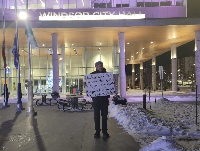
WidsorOntarioNews.com Jan 23 2026 Heads should roll in the Windsor Police Service and an investigation should be carried out by the Windsor Police Board (Mayor Drew Dickens just elected as chair) into why a peaceful demonstrator was arrested this week on public property outside city hall. Moreover, we are waiting on local politicians to speak out about the incident. Chances are they will remain mum, typical of a political class that rarely wants to stick its heads out on any matter, even the least bit controversial. What happened is that Windsor resident Spencer Allossery had the audacity to show up at the city's new gleaming ice rink and skate on it - yes, he had skates on - but holding a protest sign. He was protesting the lack of disclosure in the city's recently tabled budget documents. This occurred Jan. 5 so it's a wonder why it's making headlines now. In any case no sooner did the citizen hold up his sign he was ordered to leave. When he refused, Windsor Police arrested him. He was handcuffed - yes handcuffed - and issued a $65 trespassing ticket. Huh? What was he trespassing on? The oval skating rink is owned by the city, which is public property. But maybe the city believed the property isn't really public, like sidewalks, but is part of "Corporation of the City of Windsor" property, apparently different, even though owned publicly. Who knows what was in the city's mind? The city nor police won't comment as the matter could be "before the courts." It's not just Allossery who thinks his rights were violated. So does the Calgary-based Canadian Constitution Foundation. The incident is featured on the front page of its website. Said the Foundation: "Allossery’s protest was clearly protected by section 2(b) of the Charter of Rights and Freedoms. As Justice Bradley Miller wrote for the Court of Appeal in Bracken v Fort Erie, 'There can be no question that the area in front of a Town Hall is a place where free expression not only has traditionally occurred, but can be expected to occur in a free and democratic society. The literal town square is paradigmatically the place for expression of public dissent.'” The Foundation is assisting Allossery in getting the charge dropped. Hold the line on council salaries just as the city is holding the line on taxes
WindsorOntarioNews.com Jan 6 2026 Expect Windsor City Council to vote themselves a pay raise. The city is reviewing compensation and councillors' workloads. Windsor may be a medium size city but as Mayor Drew Dilkens says the work of a city councillor is "more than a part-time job is you're doing it right." Sure, given the voluminous city reports, council and committee meetings, neighbourhood meets and events and general constituent engagements in person or over the phone. But people who run for municipal office know this or should have known. Councillors now make around $45K with taxable benefits but can make considerably more for sitting on city hall committees and for part-time hours. The mayor makes about $200K plus taxable benefits, the fourth highest in the province, a sum way out of proportion given the city's size and demands. Moreover councillors have had a salary bump since 2019 - an almost $6000 raise. No councillors have outwardly complained about their pay but none likely would reject a major increase either. Of course a major jump, perhaps doubling pay, would be rationalized by administration determining the job in fact is "full time." It would be news if any balked and, say, and donated their money to charity. In Ontario the average city councillor earns from a low of $37,000 to a high of $186K with the median being $80,000. With the city proposing a zero per cent tax increase this year it behooves councillors to hold the line on salaries. Most have other jobs and despite council work being "more than part time" that, folks, is what they signed up for. Consider the true meaning of the term "public service." Make "crossing the floor" illegal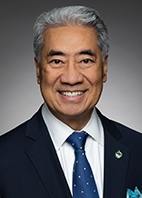
WindsorOntarioNews.com Dec 16 2025 Time for governments to make "crossing the floor" illegal. Of course governments won't do this because it's in their corrupt interests to have members of the Opposition join their parties and therefore improve their power base. The disgusting decision by former Conservative Michael Ma (who?) (photo) of a GTA riding to join Mark Carey's Liberals is just the latest affront to democracy. We saw it earlier with Nova Scotia Tory MP Chris d'Entremont turning his back on voters and joing the other (to them, dark) side. The slithery Carney Liberals are aiming for more Tories to jump ship with only one more turncoat needed to create a majority government and keep the Opposition at bay for four more years. "Crossing the floor" should be outlawed because it betrays voters' trust. If voters in Markham-Unionville or Acadie-Annapolis wanted a Liberal they would have voted that way. Besides making it illegal for MPs to do this, laws should be put in place to prevent politicians at various levels from quitting their elected posts to run for higher office or something else. Such was the case with Windsor city councillors Irek Kusmierczyk and Fabio Costante. The first to successfully run as a Liberal MP, finally defeated in last spring's election. The second to bag a plum job as head of the area's housing corp. An elected politician should stay in office for their full term, or else face a fine or monetary penalty. In the latter two cases, paying for the $100k+ cost of a byelection to replace them. Make Christmas every second year
WindsorOntarioNews.com Dec. 1 2025 With Christmas – sigh – upon us once again, here’s a thought – why not make it every second year? It seems we’ve barely had time to recover from the earlier part of the year – you know, summer and early fall, when all a sudden the sky opens and we are deluged with every manner of Christmas-themed onslaught. Of course we’re talking about the “commercialization” of Christmas. The constant streaming of TV ads, for example, from virtually the end of October – or before Halloween – creates an obnoxious cesspool of feverish consumerism. After a month of it, it seems Christmas is only about buying gifts, gluttony and other material or sensory overload. Of course, all this diminishes the “real meaning” of Christmas. Have you heard any reference to the Christ Child - at all? In fact, it’s almost politically incorrect to do so. Bad enough that there are still references to “Christmas” and not “Holiday” though the whole point of “Holiday” is it’s taking place at the traditional time of “Christmas.” Duh! Yes, we all love the razzle dazzle of the season – if nothing more than for the kids – but the warm-up to Dec. 25 has become so overwhelming that it makes you want to take a break from the whole thing. And even if it wasn’t so media-smothering, there’s still the annual personal frenzy of putting up decorations, mailing cards, hosting parties and buying food and, oh yeah, gifts. How about taking a break and let it come on at a more sensible and relaxed pace – and one that would perhaps make us enjoy it even more - every second year? Pride controversy still doesn't address real issue in the trans athlete debate
WindsorOntarioNews.com Nov 14 2025 It’s no surprise that the head of Windsor Pride Fest resigned with mea culpa gravelling apologies, par for the course in our politically correct landscape, and obviously more so when you’re the leader of one of the most politically correct groups around. What’s startling is that Wendi Nicholson said what she said in a radio interview this week. Nicholson sounded most un-Pride like when she sympathized with non-trans athletes in saying that it’s not right for trans athletes to compete with non-trans, albeit in the “elite divisions.” Not just that but it was her assumption as to why trans people compete in their preferred gender sports, which can have obvious disadvantages due to physiological differences between biological men and women. “Now we get people that come in and go, `Well, I can't make it in this sport, so I'm going to transition and be this.'” And while her apology noted she has “nothing but love for the trans community” – why shouldn’t she? – it sidesteps the issue at the heart of the controversy. As do her critics. Pride Fest itself limited its public commenting to the announcement because of what it said were threatening messages. “We realize that people are angry and we certainly understand why (and) ask that you bear with us as we work toward bettering ourselves and uphold our values of equality, inclusion, and respect.” Okay, but the nub of the issue remains: is it right that biological males, for example, despite transitioning, compete with biological weaker members of the opposite sex? No one seems to want to grapple with that question. Ford's tariff ad a waste of tax dollars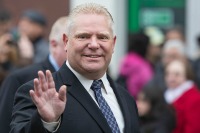
WindsorOntarioNews.com Oct 30 2025 That’s $75 million of your tax dollars, folks. Sure, most Canadians are seething mad at Donald Trump but was the $75M ad buy from the Doug Ford government worth it to, umm, make a point? Doug Ford sure seems to think so with his “never apologize” tough guy stance, saying it was worth every penny and calling it the best ad “that ever ran.” Sure, bud, and you’re sounding a lot like Trump. Ironically, Ford is Canada’s most Trump-like politician. Fighting fire with fire – we don’t get it. Ford also is known for his government’s egregious spending – the Canadian Taxpayers Federation gave the province a D- for spending increases and debt tax after the latest budget, which added $22B to reach $461B. So what's a puny $75M, right? But Ford always wimps out. He talked tough earlier this year – “we can’t just roll over” - threatening to cut off electricity to several Midwest states. He withdrew that threat. And now he ceased running the anti-Trump tariffs ad after Trump complained and threatened to impose an additional 10% tariff on Canada. Ford thinks the ad was successful because it got more than a billion eyeball impressions during the first two World Series games. Perusing the US press, it doesn’t seem to have had any effect at all. And what matters is what the Trump administration does not myriad baseball viewers. The thing about Doug Ford though, he “talks” a good game. He has the demeanor of an Ontario everyman, the kind of guy you’d like to sit around in a man’s cave and drink beer with (hence his obsession with beer and alcohol issues). And if rhetoric is what appeals to most people – apparently it does (just look at Carney's failed "Elbows Up") – Ford can spiel all he wants and get away with it. A cost that can drive taxpayers crazy
WindsorOntarioNews.com Sept 29 2025 Leamington Mayor Hilda MacDonald told council there was “no point” in arguing over the expenditure of $640,000 to create a new nest for chimney swifts, a bird “threatened” and a “species at risk” according to the Ontario government. “It needs to be done and we are going to do what we need to do,” she said. MacDonald no doubt was anticipating backlash to the expenditure and it’s likely most councillors’ eyes snapped wide open when they saw the cost. The town’s decision also got some national news coverage and online comments weren’t terribly favourable. The little cigar-shaped birds, for the uninformed, make their nests inside chimneys and these ones did so inside one that was part of the old Leamington high school, being torn down. According to a provincial fact sheet, “threatened” means the species lives in the wild, is not endangered, but is likely to become so if steps not taken to address potential threats. Apparently building a new nest – where might that be, in a recreated chimney-like structure? – is big bucks. Your tax money at work. But ironically swifts are “the most aerial of birds, flying almost constantly” except when roosting overnight or nesting. Their decline may be because modern chimneys are capped and their prey, flying insects, is also decreasing. MacDonald and council acquiesced to the mandate and signed the money away. It’s expenditures like this that drive a lot of people crazy given other priorities that exist. The birds can also use caves, cliff faces or hollow trees to nest. That $640,000 could have been put to use providing 163,000 meals at about $4/meal, the average cost in a homeless shelter. MacDonald and council could at least have registered a protest or taken a stand but in this case taxpayers weren't that much of a priority.
Free speech fine but not on boss' dime

WindsorOntarioNews.com Sept 19 2025 The Jimmy Kimmel controversy is like the Don Cherry one. Remember that? Sportsnet axed the beloved – well, by many people - hockey coach in 2019 because he used the phrase “you people” in decrying those who don’t buy Remembrance Day poppies, a slap presumably at immigrants and other “downtown” types. Yet the very people who are up in arms now about Kimmel losing his job - temporarily? - were pretty silent when Cherry lost his. And vice versa. Kimmel’s comment wasn’t simply an opinion but an erroneous or nonsensical statement: “We hit some new lows over the weekend with the MAGA gang desperately trying to characterize this kid who murdered Charlie Kirk as anything other than one of them and doing everything they can to score political points from it.” How was the assailant “MAGA” since all evidence pointed to a former conservative kid radicalized and turned left wing, according to his family. His bullet casings even had words like “Hey, Fascist! Catch” a slogan expected from someone on the left. But, sure, everyone is entitled to make incorrect statements. The problem for anyone in the public realm, like Cherry or Kimmel - especially if they work for a specific company or brand - is that speech indeed is limited. It’s the reason numerous people are fired or suspended all the time from their workplaces (how about Windsor police Const. Mike Brisco fined for making a $50 donation to the Freedom Convoy?) for vile or racist remarks on social media. Cherry and Kimmel have the right to free speech, just not on their paymasters’ dime. And of course it depends on the kind of speech their paymasters approve of. Why is the Pride movement celebrated more than any other social cause?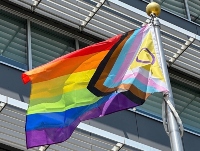
WindsorOntarioNews.com August 6 2025 Here we go again. Why is there Pride Fest in August when there is Pride Month in June? It’s a question that bedevils many in our community. For all it matters, celebrating Pride can be done any day, any time of the year. But the question arises over the official support for these events. Windsor Mayor Drew Dilkens (photo) was among the first announcing the raising of the Pride flag at city hall, calling the Fest “a vibrant celebration of love, diversity, and inclusion.” What many – perhaps most – people question is not celebrating Pride but the overemphasis on it. No other societal group, be they religious, ethnic or racial, have an entire month devoted to them let alone the add-on in August. (In that case why can’t Pride Fest be held in June?) By comparison Emancipation Day events – arguably just as important to celebrate the freedom from slavery of Black people – are given only one day, August 1. For that matter what about International Women's Day? Other ethnic groups may get flag raisings at city hall or brief tidings of support but that’s it. For some reason Pride overrides all other political/social causes. And we see this beyond the actual celebrations throughout the year. First in the massive corporate support such as companies rebranding logos with rainbow colours. (Caesars Windsor is this year’s Fest’s Presenting Sponsor.) Other institutions and ones not obviously political such as the John McGiveney Children’s Centre now celebrate it. And it’s hard to find a town or city without a painted rainbow crosswalk. Again, no other societal group is acknowledged this way. According to Stats Canada one million people are lesbian gay bisexual or other. Meanwhile South Asians make up 2.6 million, Chinese 1.7 million and Blacks 1.5 million. Even Canada’s other founding nation, the French, are barely celebrated. To question this isn’t to denigrate gay people in any way nor ignore the injustice to people over sex and gender issues. But it is to call for a major rethink of society’s priorities. Photo: Mayor Frew Dilkens facebook page
Outrageous that parent banned over challenging Land Acknowledgement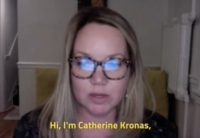
WindsorOntarioNews.com July 23 2025 A Hamilton area parent has been expelled from her school parent advisory council for disagreeing with the Indigenous Land Acknowledgement prior to meetings. Catherine Kronas not only politely refused to go along with it - a kind of guilt acknowledgement - but wanted to register her opposition. That, the school board refused and kicked her off the council. In a post on X/Twitter she said the “imposition of a (LA) during our school council meetings undermines the democratic process and constitutes a form of compelled speech which I believe contravenes the Canadian Charter of Rights and Freedoms.” She notes the board has no policy “mandating its conclusion.” She said the “sentiments implied by the (LA) are political in nature, highly controversial and therefore divisive and inappropriate within a government institution.” This is not so much you're right to say something but being forced to, what’s known as “compelled speech." Lawyer Bruce Pardy said the “issue” is whether a government institution “can dictate the content of people’s opinions and control whether or not they state those opinions.” He says it’s a “reflection of the degree to which institutions have been compromised.” (Virtually all government institutions and many private now have LAs and there has been no consultation prior to adding them.) Moreover, Kronas was elected to this position so she has a democratic mandate. Her banishment also echoes what is happening by school boards to dissident voices – parents and trustees - across the province including, as we well know, at the Greater Essex board. We’ve called for the province to intervene and clean this mess up. This isn’t just censorship it’s outright Stalinism by banning someone whose opinions you don’t agree with. This is not the Canadian way and must stop now. Dilkens, Costante and city hall jobs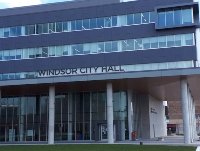
WindsorOntarioNews.com July 8 2025 Two recent public hires have raised controversy, one more than others. The hiring of Mayor Drew Dilkens’s wife Jane Deneau, for a project manager for the city’s parks and rec department (salary $96 to $116K) has brought uproar including of course among the mayor's long-time critics. It's understandable why some people may see malfeasance. How, after all, can the spouse of the city’s top official be hired for a city job? It simply must be nepotism, corruption and more evidence of the Dilkens’s “Strong Mayor” powers! This, despite Deneau’s wide experience for the job and the fact she was rejected for two other city jobs; didn’t even get interviews. Critics should be careful. The Ontario Human Rights Code protects marital status, and that's exactly what's at stake here. And that applies to everybody, from the spouse of a day labourer to that of a top politician. Meanwhile former Ward 2 councillor Fabio Costante announced he is jumping from city council to a new job heading the Windsor Essex Community Housing Corporation. The job in 2016 (last available date) paid $136,000+. A city councillor is paid a minimum of $52,000. Costante was a lawyer in private practice and it calls into question how much he was earning as a sole practitioner to go for the government job. Regardless, he isn’t fulfilling his council mandate to fill his term. Now the city is faced with calling a byelection. The last one to fill Irek Kusmierczyk’s seat - another who jumped for federal politics - cost $120,000. Maybe that amount can be deducted from Costante's new salary. School board violates elected trustees' freedom of speech
WindsorOntarioNews.com June 19 2025 When it comes to local elected bodies the Greater Essex County District School Board (GECDSB) takes the cake for being the most officious, authoritarian, censorious and some might even say, fascistic, organization around. This seems to be par for the course for school boards in many areas, stuffed with self-appointed little dictators who want to ban parent participation in everything from public meetings to informed transgender student identity, the cause de jour. And even their own trustees face punishment if they dare step out of line. According to the Windsor Star this has happened to three trustees this term alone. Their crime? Speaking to the media, the supposed perogative of the board chair. In some bizarre twist they violated the board's "code of conduct." But these, after all, are elected officials, not appointees doing a leader's bidding or rubber stamping decisions. Of course the subject matter of the rebukes is suspicious, having to do with school naming and transgender issues, both which cross into politically correct territory. A code of conduct seems highly subjective. What does “discredit or compromise the integrity of the board,” and “inspire public confidence in the abilities and integrity of the board” mean? Trustees, like other elected officials, should be free to speak their minds, period. If others don't like it they can criticize. But stamping out freedom of speech is one of the first signs of a dictator. Curlers get the shaft again
WindsorOntarioNews.com June 4 2025 Why should Windsor curlers be made the scapegoats for a fire at the WFCU Centre? The April 28 fire engulfed hundreds of one of the WFCU community rink's solar panels and that arena is now inoperable for as long as a year until repaired. On a side note it's interesting that the solar panels caught fire and no conclusion has been drawn as to the cause; it leads to the question of how safe are solar panels - especially industrial size - on roofs? In any case the city is recommending curlers give up an ice pad at the smaller Capri Pizza rink in south Windsor, to make way for the skaters and hockey teams that are displayed by the damaged WFCU rink. Admittedly their use is much greater than that of the curlers - 56 hours (53 are prime time) per week total. The two other WFCU community rinks are almost fully booked. Meanwhile on the Capri rink much less time is booked, leaving available 74% prime ice time and 60% non prime. The damaged rink reduces overall city facilities' ice time by 53 hours. "This would force some user groups to reduce their programming and others not being able to rent ice time," a city report says. But, it admits, "curling would be displaced." Money is also a big factor - the city made $441k from the WFCU rink and only $155k from the curlers. But let's pause. Curlers have already been forced out (some would say "kicked around") of their long time home at the defunct Roseland rink just last year and now are confronted with this. Second, if it's only going to take a year for repairs why can't skating groups sacrifice? (The report is mum.) Alternately, curlers could do the same, so long as the city guarantees their future - with some sweetener thrown in for making the sacrifice.
Let's just fly the four official flags
WindsorOntarioNews.com May 28 2025 The city’s updated flag policy is still confusing. City staff recommended flags shown at city hall be limited to the Canadian Flag, Ontario Flag, City of Windsor Flag, and the Franco-Ontarian Flag “while also providing flexibility to recognize visiting official delegations,” whatever that means. According to Mayor Drew Dilkens during a raucous debate on the issue brought by an out-of-town gay activist (who was kicked out of the meeting for being unruly) it has “nothing to do with Pride or LGBTQ.” Meaning presumably those flags will continue to be hoisted. Otherwise, requests will be denied “to avoid approving displays that could be perceived as divisive, political, or otherwise controversial.” With due respect to the LBGTQ community their flag and any others not of the four specifically named entities should not be flown. While the mayor says the city supports that community, as it should, it doesn’t mean it – or any other civic, social or advocacy organization – should have special privileges no other group has. And while supporting LBGTQ rights is a given flying the flag does indeed affront the city’s policy as it can be “divisive, political, or otherwise controversial.” Take a look at some of the reactions across Ontario to flying the flag and Pride month, especially by religious or conservative groups. The York Catholic board chose not to fly it. A Niagara trustee compared it to the Nazi flag. And some London Christian and Muslim parents kept students at home at the start of Pride month. So mayor, let’s eliminate all confusion – and controversy - and just fly the four named national and provincial flags. Recount, Bandshell, tourist tax and anti-racism - a pot pourri of opinions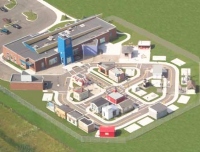
WindsorOntarioNews.com May 14 2025 Perhaps we’re missing something but why did a judge order a recount for the federal election results in Windsor-Tecumseh-Lakeshore? The law requires a recount when there is a less than 0.1 per cent difference (seven votes; the diff was 77). Why wasn’t this good enough for the Irek Kusmierczyk campaign, the Liberal incumbent who lost to the Conservatives' Kathy Borrelli in her second run at him? The claim is that too many ballots were incorrectly rejected. Don’t be surprised if Kusmierczyk pulls this out, putting the Liberals in striking distance (with other national recounts) of a majority, and symbolically claiming that our region hasn’t turned inky blue…..Just when the region is trying to attract more tourism, wouldn’t you know it? The local tourism agency is proposing that county hotels and Airbnbs start charging a so-called Municipal Accommodation Tax (MAT) because…well, just because. (The city already charges it.) CEO Gord Orr says the tax (after all, lots of big cities have it) would support tourism growth through marketing and “product development”…..And no surprise that Windsor City Council has been advised that the derelict Jackson Park Bandshell – one time home of Emancipation Day celebrations and which was last used almost 40 years ago and wedged into an awkward piece of property – is now facing an increase in costs for a feasibility study from a proposed max of $100K to $300K. But of course! That’s let alone the millions needed for actual restoration. And the fact the neighbouring Windsor Stadium site may now be redeveloped for housing complicates matters further…..Finally why is the eastside Safety Village (image) engaging in politics? The one time “Children’s Safety Village” with charming street safety replicas has embarked on a “No Place for Hate” campaign. It’s to prevent “hate-motivated” crimes and support human rights. The province is funding to the tune of $160,000. But why? Has there been an increase in these crimes locally? And shouldn’t this be the job of organizations that deal with human rights? Or is the Village simply jumping on society’s current fashionable race-obsessed bandwagon? Absurdities abound in election results
WindsorOntarioNews.com April 30 2025 The fed election results abound with absurdities. The Tories lose in a tight race when only a few months ago they were 30 points ahead of the deadhead Liberals. Thanks President Trump! And the NDP are decimated, their worst showing in history. Yet they still may hold the balance of power because the Liberals didn’t squeak out a majority. How’s that for irony? Pierre Poilievre losing his seat after holding it for more than 20 years can’t be that Ottawa turned their backs against the incumbent so much as they hated Trump and the city’s well fed middle class civil servant demographic fled. The NDP’s Jagmeet Singh went down to flaming defeat as did his party. Yet his election night speech sounded celebratory, as if he didn’t have a care in the world and the party was victorious. But he got his long-sought pension and now probably a Liberal appointment. Locally, Windsor-Essex was swept by a wave of blue. Yet our area is Ground Zero for US auto tariffs, the very thing that the rest of Canada feared for choosing Liberal red. It’s indicative that the Conservatives have genuinely become the working-class party, a claim the NDP hasn’t been able to make – except rhetorically – in years, and now it’s vanquished. And shockingly both Lib incumbent Irek Kusmierczyk and NDP placeholder Brian Masse - the latter a veritable Windsor West institution - went down to defeat, and embarrassingly so. Kusmierczyk’s numerous photo ops and funding announcements obviously had no impact – he must be cursing the electorate through gritted teeth. And Masse came third! Obviously a sign of the NDP’s wipeout. The same, to a lesser extent, could be said about the NDP’s Lori Wightman in Essex who garnered a pitiful 4000 votes, a reflection perhaps of her failing to secure a good contract as union leader after a prolonged strike by library workers several years ago.
|

WindsorOntarioNews.com
Published since 2009
Publisher: Ron Stang
info@windsorontarionews.com
Replace those tacky Welcome signs now
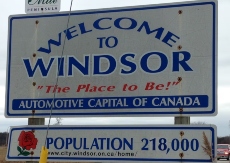
The city may be grappling with US tariffs but in the bigger picture it’ been a winner of late. There’s the $5.7B Gordie Howe Intl Bridge, the $5B Next Star battery plant and now (see News Backgrounder) as much as $1.2B in additional manufacturing investments. Former Mayor Eddie Francis helped beautiful the city’s entrance strips (ie, Dougall Ave.) with attractive new trees. Now it’s time to upgrade the city’s Welcome to Windsor signs. These tacky signs have the 1990s written all over them with bad and busy graphics and physically some aren’t even standing properly. Let’s see some contemporary signage that reflects an otherwise progressive industrial city. – 23/4/26
Stellantis' worker hard line over the top

Yes, it's nice to buy the vehicle your neighbours build, as the old bumper sticker had it. But Stellantis, at least in the US, is demanding employees drive the cars they build. And that makes sense - kind of. What if you're a new employee and have a vehicle made by another firm? Apparently Stellantis will "issue multiple sticker warnings to employees. Then, they’ll actually put a boot on their vehicles that aren’t Stellantis makes like Jeep, Chrysler, Dodge, and Ram brands." Hey corporate - that's a little over the top. - 8/4/26
More bureaucracy from Town of A'burg
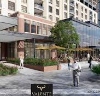
The Town of Amherstburg wants to designate the former General Amherst High School a heritage building. That's after developer Valente purchased the building and is long on its way to redevelop the site as a largely residential complex. It's hard to know exactly what part of the building there is to designate since the school was added on to in stages over decades. Valente's plans already show it saving some of the oldest - original - south side facade as well as the venerable 1967 gym murals. A'burg's action seems government overreach in an age where every bureaucratic I must be dotted and T crossed - and the reasons projects get delayed and cancelled, as A'burg has some experience with. - 25/3/26
No precedent charging for green recycle bins

The whole idea of charging residents for recycling bins flies against past practice when it comes to garbage collection. Windsor is covering the cost of the so-called green or organic waste bins but the county is spreading the cost with residents picking up, depending on the municipality, from $154 to $161 per year. Some homeowners have been signing a petition opposing the program altogether. It comes as the region makes substantial changes to collection - to biweekly regular collection in Windsor, for example. Apparently residents there are taking to the green bins - 3000 tonnes of organic waste has been collected. But one wonders if they'd be so cooperative if they had to fork over dollars for a program no one asked for which is provincially mandated. Which begs the question: why isn't the province sharing the cost? - 6/3/26
$750K fine for saying the wrong thing
Free speech is out the window. Following the arrest of a Windsor man last month for protesting secrecy during city hall budget talks – we heard no local politicians criticizing his arrest – comes word that in BC a human rights tribunal has fined a former school trustee, Barry Neufeld (photo), $750,000 for calling gender a “social construct” and for educators to “stop affirming the gender identities of students.” $750,000! This unquestionably must be appealed. In a free country, people are allowed to have contrary opinions; stamping out one side of the debate smacks of fascism or totalitarians – call it what you like. – 20/2/26
Recruitment nice, but will hardly stop an American invasion
It's great that the navy has found a new source of recruits - it's always good to see young people bolster the miliary with Canadian pride. Windsor's HMCS Hunter has seen a 30 year high in recruitment. "That's us being prepared to defend Canada and our interests, should we be called to do so," Lt.-cmdr. Chris Elliott said. But we're afraid doing so as a way to strengthen the country's armed forces against any foreign attack (i.e., an invasion by the current US Trump administration) simply won't stop the world's most powerful military. But, sure, international peacekeeping or multilateral NATO involvement might more realistically fit the bill. - 5/2/26
Downtown is for people - and cars
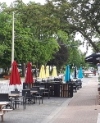
A trendy urban philosophy is to close streets to cars and make them people places. It's at the root of so-called pedestrian malls and street narrowing and widening sidewalks, as downtown Windsor has done. The theory might work in some places but, as is the case in Amherstburg - and even Windsor - not so much. The town has seen major rifts over its Open Air Weekends (photo) when streets downtown are partly closed. And now a plan to close Murray Street - perhaps the oldest and narrowest street in town - is also meeting opposition. Why? Because cars bring people and people are good for business. - 21/1/26
Back to the picket line - not

What if they gave a protest and nobody came? That's the laughable result of CUPE's attempt to rally the troops in Windsor to protest the province's back to office work mandate that took effect Monday. It's not sure why no one turned up - was it the cold or staff just seeing the futility of fighting a now lost cause, or ironically maybe they had to go to work? Perhaps the most ridiculous union stand these days - led by public sector unions - is protesting back to office mandates post-Covid. What was supposed to be temporary morphed into semi-permanent, enabled stupidly by employers. But now it's finally back to business. - 7/1/26
Naysayers - again - got it wrong on rink

It might not be worth $15 mil but city hall's new rounded skating rink (an event space in summer) proves one thing: the naysayers got it wrong. From online comments one would think this new attraction in downtown Windsor would be a white elephant right from the start. But hundreds turned out opening weekend. It was the same story with Bright Lights Windsor, initiated a few years ago. The naysayers harped that the $3 mil (later cut in half) for the Jackson Park display was over the top. Yet the crowds came out and still do. Just goes to show that online trolls and civic loud mouths hardly represent the general public. - 16/12/25
Photo: City of Windsor
LaSalle spent $50 million on this?

At least now it might be used - kind of. LaSalle’s Front Rd. LaSalle Landing project has all the makings of a grand boondoggle. $50M was earmarked to transform a moribund waterfront on the back end of town into a - modern moribund waterfront? The main part of the park with the giant LaSalle sign opened in the summer. But you hardly see people there. Why? It might be because it, ironically, is not a people place. Few if any trees (the image is deceptive), benches and the kind of environment that serves as a magnate to draw people: no buskers, street games or food trucks. And a massive parking lot with numerous EV charging stations often sits empty. News flash to LaSalle authorities: Essex County is a traditional pick-up kind of place. Now the $9M Loop skating trail has opened. At least that’s reason to go. But at what cost? – 2/12/25
Image: Town of LaSalle
Third resignation not the charm for board
The third time is definitely not the charm for the Greater Essex County District School Board. Now trustee Nancy Armstrong (photo) has thrown in the towel on what is possibly a quite dysfunctional board. Armstrong was in the centre of the controversy over the renaming of the new Kingsville HS where the board overrode local citizens and jettisoned the “Kingsville” name for something more woke and nebulous – “Erie Migration.” The board wanted to send her for “restorative justice” (meeting victims of an offence) for criticizing this? The resignation follows those of Sarah Cipkar and Ron Leclair under questionable circumstances. Again, this is a board the provincial government should rein in if not take over. – 18/11/25
Dearborn terror plot a reminder they have no tolerance for gays

The arrest of two Dearborn men for allegedly plotting a terrorist attack Halloween night against gay-popular nightclubs in Ferndale should give pause, especially to gay people. According to FBI “Many of the clubs and bars in this area intentionally attract members of the LGBTQ+ community.” Conversations on an encrypted app indicated an attack “on behalf of…..ISIS.” ISIS was also a prime motivator in the 2016 Pulse gay nightclub attack in Orlando Fla., in which 49 people were killed. This foiled plot should be a reminder that Islamists would like nothing better than to see people like gays eliminated. – 4/11/25
Photo: FBI
Court decision upholds politico's free speech
In Chatham-Kent councillor Rhonda Jubenville (left) has got vindication over social media posts which an integrity commissioner earlier found violated the municipality’s code of conduct. It was in relation to a contentious flag debate last summer and after the councillor had motioned to limit the type of flags allowed to fly. Specifically it was complaints about her social media posts and she was considered to be anti-Pride when she indicated her motion was directed at a variety of flags. But a judicial review quashed the decision and awarded Jubenville costs of $20,000. The court found the integrity commissioner simply gave “an reasonable finding.” Good for Jubenville. This whole matter of codes of conduct smells and gives wide latitude to complaints against otherwise free speech and comment germane to an issue at hand. The complainants of course were anonymous and their factual basis undisclosed , another matter that should be reviewed. – 30/9/25
Amherstburg right to stick to pencil-and-paper voting
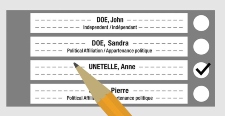
Good for Amherstburg. The town is sticking with old fashioned voting. It’s a snub to fancy electronic voting, something elected bodies everywhere should be wary about. Canada’s electoral system has been marked by fairness and efficiency because citizens in most elections – municipal ones seem the exception – use pencil and paper to mark ballots. A contrast to the United States where recent national elections have seen computer breakdowns, delayed results – sometime by days – and widespread accusations of fraud. With computers who knows what goes into to the ether? With pen and paper it’s there for all to see. A survey found Aburg residents highly skeptical of both online and phone-in voting. The town is known for its history. Alongside this sometimes old-fashioned notions are the best. – 17/9/25
Why does Dilkens acquiesce to wokeness?

Windsor Mayor Drew Dilkens’s raising the Pride flag at city hall is another example of how so-called conservative (or Conservative) politicians don’t challenge the status quo when it comes to politically correct causes. Of course, as Seinfeld memorably said, “not that there’s anything wrong with that.” It’s just that Dilkens, the rest of council, and thousands of other municipal, provincial (we’re looking at you, Premier Doug Ford) and federal politicians – with rare exceptions – question the current orthodoxy of celebrating certain causes more than others. The other major example is Land Acknowledgements, basically a hollow prayer of guilt, announced before every official government meeting. Dilkens, and others of a conservative (or Conservative) bent – whom one might expect would question these forms of leftist-inspired groupthink – are silent here as well. – 5/8/25
Photo: Mayor Drew Dilkens’s facebook page
Nurses association against practicing "white" medicine
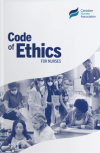
How far is woke ideology going? As far as medicine and especially the Canadian Nurses Association, a national credentialing organization. Its new Code of Ethics tells nurses to denounce the “white European-centric” foundations of modern medicine. According to Juno News, “Regulated Canadian nurses are now required to align their conduct with a detailed set of political values — among them, social justice, gender ideology, Indigenous belief systems, and climate activism. Nurses are now required to acknowledge ‘the historical and continuous impact that White, European-centric models of nursing and health have on the perpetuation of anti-Indigenous racism, anti- Black racism, and other types of racism.’” It seems not upholding any of these could result in non-certification, no matter how technically proficient the nurse otherwise is. And is it too far fetched to ask what are the implications for nurses not practicing “white” medicine? Bizarre if not possibly dangerous. – 22/7/25
A disgraceful protest on the riverfront

How childish the throwing of tomatoes and Timbits (it’s Canadian – we get it) at a big picture of Donald Trump at Dieppe Gardens on the weekend. This isn’t the kind of “peaceful” demonstration Windsorites are used to and the organizers – the so-called “Elbows Up” brigade – should be ashamed. Organizer Elaine Weeks - a noted local author and daughter of former Mayor Bert Weeks - her reputation tarnished, should be embarrassed. And what does the civic organization, Windsor Essex Community Foundation, that erected the Great Canadian Flag think? Doubtful that the plaza would be used for this purpose. – 8/7/25
Photo: Google Street View
City Council errs on Sandpoint closure
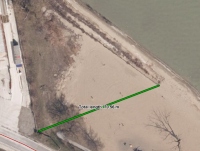
There’s apparently something about beaches and water that’s made Windsor City Council unanimously vote to close down Windsor’s only summer beach. Yes, Sandpoint Beach has been the site of nine drownings, but that’s been since 1980, the year it opened - 45 years ago! Yes, every death is tragic but it seems those tragedies have a more searing effect on city leaders than other kind of mishaps, such as road accident fatalities, of which Windsor had 46 in 2023 alone. It’s probably like flying. Travelling by plane is enormously safer than by car but plane accidents are horrific and get all the publicity. It’s a shame, and the residents of one of Canada’s hottest and most humid cities - ironically bordering on water - now have to suffer. And it most impacts lower income people, who otherwise don’t have backyards, cottages or boats to beat the heat in. – 19/6/25
Who gets 35% raise? Why, Ont's MPPs do

Oh sure, give Ontario's MPPs a 35 per cent pay raise. And while at it deliver a brand new pension because the poor dears never got one up to now. As per their federal counterparts and their "gold plated" ones. Cry us a river. It's been 16 years since a last pay increase. "It's terrible," bleated Premier Doug Ford. Not to people trying to put food on the table or afford a home. And of course all parties supported this - including the "working class" NDP. So now, their pay goes from $116k to $157k. And just like the feds, a "defined benefit" pension, something long out of style in the private sector. Deplorable. - 4/6/25
Long past time to unbox John A's statue
Unboxing Sir John A’s statue at Queen’s Park is finally happening. But why now is a good question. This should have been done immediately after the violence (I.e., vicious teardowns and “blood” smearing) a few years ago in the aftermath of the US George Floyd riots (through that was a US issue) and concomitant demonstrations against a host of issues including “white supremacy”, “racism” and “colonialism.” Canada’s founding PMs likeness was removed in a host of cities including his hometowns of Kingston and Victoria. Shame! Finally, the Ontario government has the cojones to do restore it. Let the howling begin. And make sure this statue is properly secured. – 28/5/25
Photo: Alamy
Meanwhile in Sarnia
Has it really been more than a year since Sarnia City Council met in person? In this age of “safetyism” and elected officials automatically defaulting to paranoia about public meeting disruptions (think public school boards and Essex County Council), our neighbour to the north's elected body has been meeting by video conference. That’s all because one councillor, Bill Dennis (photo), acted out – admittedly deplorably and for which he has abjectly apologized – at fellow councillors and staff. Dennis was in fact barred from council meetings. Moreover, a “health and safety” report is still to come forward. So why can’t councillors meet in person as they should be as an open and responsive civic body? – 14/5/25
That’s right, dwell on the negative
The province has announced $4.5M in new Transit Windsor funding through the Gas Tax rebate. This on top of the 2025 city budget with $182 million over the next decade for “local transportation infrastructure and services,” according to the mayor’s office. Council this winter also approved 15,000 extra transit hours on top of a 40% increase in funding over the past decade. Yet Activate Transit, a local lobby group – while acknowledging more transit “operational funding” - still decided to concentrate on the negative by silently protesting the opening of the controversial Legacy Beacon Streetcar No. 351 exhibit – which also includes a badly needed riverfront café and terrace. – 24/4/25
Dumb as clucks Libs harm local business

And you thought Trump's tariffs were bad. One of the first local businesses to be hit by tariffs is Sun-Brite Foods, knocked by 25% on steel and aluminum products. This is Canada's retaliation to the Trump 25% on same trade. Yet the company is now amassing $250K a week in extra charges, according to a report. Makes your patriotic heart just go pitter-patter, doesn’t it? Dumb as clucks Liberals. - 10/4/25
No handouts for border duty free shops

One sympathizes with the duty free stores which are experiencing lower revenue due to Canadians boycotting the United States. But this has only been going on for a few weeks and already their hands are out for government assistance. Sarnia Mayor Mike Bradley calls for "direct support." One BC owner says they feels like "hostages in economic warfare." But this is another example of private business immediately seeking government aid at the first sign of distress. If you can't make ends meet, close or find another business model. - 25/3/25
Accountability suffered blow in recent election
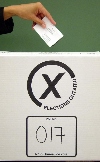
The recent provincial election, snap as it was, was no excuse for the lack of political debate, beginning at the top, with Premier Doug Ford refusing to take media questions for one three day stretch. Calling an election on an imperative matter like fighting Donald Trump's tariffs is no excuse. Indeed, the lack of political discussion filtered down to the local level, with three riding debates cancelled because one party refused to take part (I.e, the PC) and others not having candidates nominated. Ridiculous. This increasing secrecy is not healthy in a democracy. - 11/3/25